Chahid El Hafed, March 25, 2026
The Association of Families of Sahrawi Prisoners and Disappeared Persons (AFAPREDESA) celebrates and welcomes with deep satisfaction the statement issued today, March 25, 2026, by Human Rights Watch under the title “UN: Western Sahara Peoples’ Self-Determination at Risk,” in which the organization clearly and firmly denounces that the right to self-determination of the Sahrawi people is at serious risk.
HRW statement:
https://www.hrw.org/news/2026/03/25/un-western-sahara-peoples-self-determination-at-risk
AFAPREDESA particularly values that HRW has explicitly pointed out the serious shortcomings of UN Security Council Resolution 2797 (October 31, 2025), which renewed MINURSO’s mandate by presenting the 2007 Moroccan autonomy plan as a “possible basis” for negotiations. This position, according to HRW, does not guarantee respect for the inalienable right of the Sahrawi people to self-determination enshrined in international law.
HRW recalls that 35 years ago the UN Security Council agreed to hold a referendum on self-determination and that, unfortunately, “political convenience threatens to prevail over the rights of the Sahrawi people.” The organization reaffirms with absolute clarity that it does not take a position on independence, but insists that any solution must allow the Sahrawi people to freely decide their political status, as summarized by the Associate Director for the Middle East and North Africa, Hanan Salah: “To deliver on those rights, the Security Council and all countries must ensure that the Sahrawi people can freely determine their political status.”
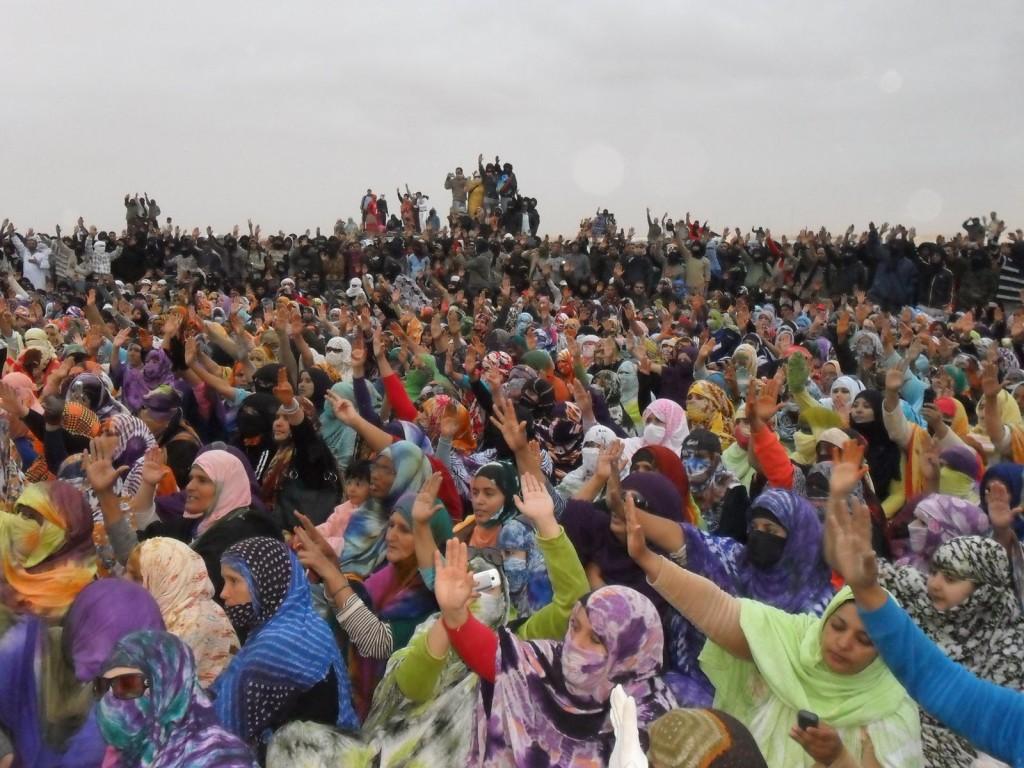
AFAPREDESA makes special mention of United Nations General Assembly Resolution 1514 (XV), adopted on December 14, 1960, the Declaration on the Granting of Independence to Colonial Countries and Peoples. In its Article 1, this resolution categorically states that: “The subjection of peoples to alien subjugation, domination and exploitation constitutes a denial of fundamental human rights, is contrary to the Charter of the United Nations and is an impediment to the promotion of world peace and cooperation.”
HRW statement constitutes a far-reaching endorsement of great moral authority for the Sahrawi question, and aligns fully with the historic mandate of Resolution 1514 (XV). It reinforces and updates the complaints that the organization had already gathered in its World Report 2026 (published on February 4, 2026), in which it documented the intensification of Moroccan repression against activists, journalists, and human rights defenders in Western Sahara: convictions for “defamation”; systematic harassment of those defending self-determination, prevention of peaceful assemblies, and constant obstruction of local human rights organizations.
Human Rights Watch statement is a historic step that returns the focus to the core of the conflict: the right of the Sahrawi people to decide their future through a free, fair, and transparent referendum, as established by the 1991 UN settlement plan and enshrined in Resolution 1514 (XV). Its unacceptable that complicit silence or “political convenience” should replace international legality.
Therefore, AFAPREDESA:
- Demands that the UN Security Council and all its Member States, and very particularly Spain in its capacity as the de jure administering power of the territory, urgently assume their responsibilities and ensure that any negotiation process scrupulously respects the right of the Sahrawi people to self-determination, as enshrined in United Nations General Assembly Resolution 1514 (XV).
- Reiterates its unwavering commitment to defending the human rights of Sahrawi political prisoners, the disappeared, and all defenders of self-determination, victims of a repression that HRW has rigorously documented.
- Calls on the international community not to recognize any imposed solution that ignores the free will of the Sahrawi people and thus violates fundamental human rights.
AFAPREDESA publicly thanks Human Rights Watch for its courage, its independence, and its commitment to the human rights of the Sahrawi people. This posotion reinforces our conviction that justice and international legality will prevail over any attempt to impose a solution contrary to the will of the Sahrawi people.