Chahid El Hafed / Occupied El Aaiún
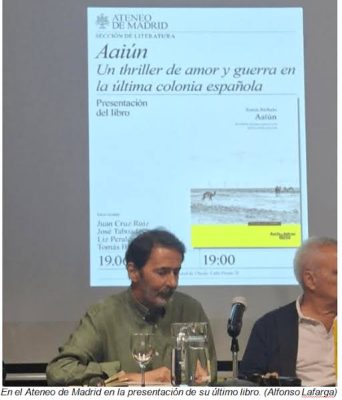
AFAPREDESA pays tribute to the memory of Spanish journalist and writer Tomás Bárbulo, who passed away in Madrid on July 15, 2026, for his valuable and irreplaceable contribution to breaking down the wall of oblivion and the law of silence that for decades has surrounded the crimes committed in Western Sahara during the Spanish colonial period.
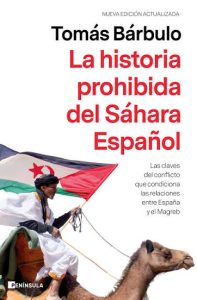
With his work “The Forbidden History of the Spanish Sahara” (2002), Tomás Bárbulo brought to light, with journalistic and documentary rigor, one of the most emblematic cases of the Sahrawi people’s struggle: that of leader Mohamed Sidi Brahim Basiri (Basiri), founder of the first Sahrawi nationalist movement (Vanguard Movement for the Liberation of the Sahara). Bárbulo reconstructed, from Spanish military and civil archives and reliable testimonies, the circumstances of his arrest following the Zemla events of June 1970, and pointed to concrete leads regarding his probable execution and burial in the dunes near El Aaiún beach on July 29, 1970. His contributions remain an essential reference for understanding how the possibility of peaceful decolonization was cut short and how the seed of distrust toward Spain was sown among the Sahrawi people.
|
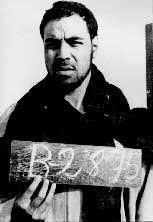
According to the account in the book “The Forbidden History of the Spanish Sahara” (chapter “Searching for Basiri”): In 1970, a moderate nationalist movement emerged and problems began. Despite its conciliatory messages, the authorities refused to negotiate. They repressed it with gunfire, imprisoned its leaders, and its leader, Basiri, disappeared beneath the desert sand. In this way, Spain lost the opportunity to oversee a new state in the Maghreb. The moon was waning in the sky over El Aaiún on July 29, 1970. Commander Asensi’s clock, aide to Governor Pérez de Lema, newly appointed Provincial Security Delegate, read 4:30 a.m. when he appeared with two canvas-topped Land Rovers at the gate of the Artillery barracks. On board the vehicles was a patrol of legionnaires from the Tercio Juan de Austria, under the orders of a captain and a brigadier attached to the General Headquarters. From the cell, located at the very entrance of the regiment, next to the sentry box, they brought out a short man. The hood of his djellaba concealed his bearded face. He carried a plastic bag in one hand and was not handcuffed. · Basiri was arrested in the early morning of June 18, 1970 (after the Zemla events) by a patrol of the Territorial Police/legionnaires. · On July 29, 1970, he was allegedly taken from the El Aaiún cell (now known as the Black Prison) and driven by Land Rover along the beach road to dunes bordering the Atlantic. There, he was allegedly forced to walk forward under the vehicles’ headlights, and that was the last time he was seen alive. Bárbulo indicates that his body would be buried under those dunes. Bárbulo bases this reconstruction on:
· The absence of credible official traces regarding his expulsion or subsequent fate. This version contradicts the official Spanish version of the time (which claimed he was expelled to Morocco or the border) and other theories (such as immediate execution by Morocco). |
Tomás Bárbulo’s tireless work helped keep alive the memory of Basiri, the oldest symbol of the Sahrawi struggle for self-determination, and exposed the contradictions and silences of the Spanish official versions. Today, his legacy is a beacon for all generations demanding truth, justice, and reparation.
We deeply regret that the parliamentary initiatives presented in the Congress of Deputies to clarify Basiri’s whereabouts and recover his memory did not succeed. In particular, the Non-Law Proposal on the recovery of the memory of Sahrawi activist Basiri (2012) and other later initiatives, promoted mainly by left-wing forces such as Izquierda Unida and, later, EH Bildu, among others, were blocked or distorted due to the lack of support from the two main state parties (PP and PSOE). This refusal reflects, once again, the priority given to maintaining silence over the duty of truth and justice toward the Sahrawi victims of the Franco dictatorship.
These parliamentary failures, together with the valuable documentation and leads provided by Tomás Bárbulo, must constitute central elements to be considered by the Truth Commission chaired by Judge Baltasar Garzón. The Basiri case is not an isolated event: it is part of the human rights violations committed during the Franco era in Western Sahara, a territory that Spain had the international obligation to decolonize.
AFAPREDESA reiterates its demand to the Spanish Government to:
- Open all military and civil archives related to the disappearance of Basiri and other Sahrawi detained-disappeared persons.
- Actively collaborate with the Truth Commission to clarify these crimes.
- Recognize the responsibility of the Spanish State in Basiri’s disappearance and advance measures of truth, justice, and reparation for all Sahrawi victims.
The memory of Basiri and the work of Tomás Bárbulo will not fall into oblivion. Their example drives us to continue demanding truth and justice until the end.
Truth, Justice, and Memory!