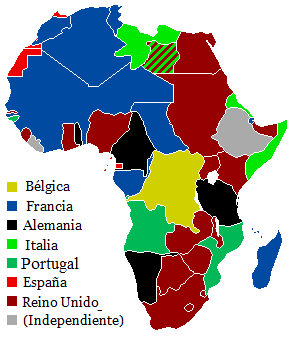
The year 1974, marked by the Carnation Revolution in Portugal, was pivotal in the decolonisation processes of the territories under Portuguese and Spanish colonial rule. Both countries recognised that same year the right to self-determination of African peoples: Portugal did so with respect to Angola, Mozambique, Guinea-Bissau, Cape Verde and São Tomé and Príncipe; Spain, with respect to Equatorial Guinea and the Spanish Sahara.
That same year, the United Nations General Assembly adopted two resolutions of great historical significance for the affected territories.
Resolution 3294 (XXIX), adopted on 13 December 1974, addresses the “Question of the Territories under Portuguese domination”. It was issued after the Carnation Revolution (April 1974), when the new Portuguese government recognised the right to self-determination and independence of its overseas provinces. This resolution not only facilitated the independence of the peoples of Angola, Mozambique, Guinea-Bissau, Cape Verde and São Tomé and Príncipe, but also urged the international community and United Nations agencies (such as the World Health Organization) to provide humanitarian, economic and emergency assistance to rebuild those territories, whose health and civilian infrastructures had collapsed due to years of colonial war.
Resolution 3292 (XXIX), also adopted on 13 December 1974, requested an advisory opinion from the International Court of Justice (ICJ) on the legal status of Western Sahara prior to its colonisation by Spain. The resolution asked the Court in The Hague to answer two fundamental questions, without prejudice to the right to self-determination of the Sahrawi people, in accordance with Resolution 1514 (XV) of 14 December 1960 (Declaration on the Granting of Independence to Colonial Countries and Peoples):
-
Was Western Sahara a territory belonging to no one (terra nullius) at the time of its colonisation by Spain?
-
What were the legal ties between this territory and the Kingdom of Morocco and the Mauritanian entity?
The International Court of Justice issued its advisory opinion on 16 October 1975, concluding that Western Sahara was not terra nullius and that there were no ties of territorial sovereignty with either Morocco or Mauritania that would prevent the application of the principle of self-determination through the genuine expression of the will of the Sahrawi people.
Despite the clarity of these conclusions, the last government of the Francoist regime, with Juan Carlos de Borbón as acting Head of State following Francisco Franco’s illness, openly betrayed the right of the Sahrawi people. In November 1975, in the face of the so-called “Green March” organised by Morocco, the Spanish authorities signed the Madrid Accords, by which they handed over de facto the administration of the territory to Morocco and Mauritania, abandoning the Sahrawi population and contravening both the ICJ advisory opinion and the resolutions of the United Nations General Assembly. This unilateral handover constituted a flagrant violation of Spain’s international obligations as the administering power.
Since then, successive Spanish governments have maintained an ambiguous attitude or one directly contrary to the right to self-determination of the Sahrawi people. Some have resorted to dilatory formulas or to a formal recognition of the status of a non-self-governing territory without adopting effective measures. However, the actions of the current coalition government have been the most disastrous: by explicitly supporting the colonialist and annexationist theses of Morocco, it has betrayed not only the principles of international law and UN resolutions, but also Spain’s historical commitment to decolonisation and to the Sahrawi people. This position amounts to an abandonment of international legality and a legitimisation of the military occupation and exploitation of the territory’s natural resources.
In conclusion, territorial claims based on historical or geographical allegations lack legal validity when they conflict with the principle of self-determination of peoples, as unequivocally stated by Resolution 3292 (XXIX) in the Sahrawi case, and as should be applied, for the sake of consistency, to any similar claim, including any that might be made with respect to Ceuta. Contemporary international law, consolidated after the United Nations Charter and Resolution 1514 (XV), establishes that the freely expressed will of the peoples of non-self-governing territories prevails over claims to sovereignty based on historical ties or geographical contiguity. Any attempt to resolve the question of Western Sahara outside a genuine and internationally supervised referendum on self-determination constitutes a violation of international law and perpetuates an anachronistic colonial situation.