Wilaya Chahid El Hafed, 29 September 2026
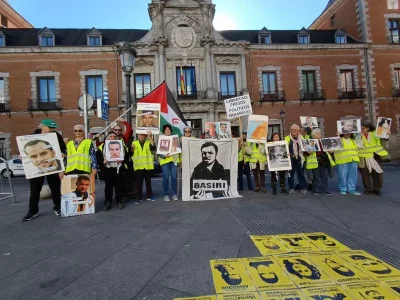
The Association of Families of Sahrawi Prisoners and Disappeared Persons (AFAPREDESA) has sent an official letter to Ms. Mirjana Spoljaric Egger, President of the International Committee of the Red Cross (ICRC), requesting its immediate intervention to visit the Sahrawi political prisoners who are on hunger strike in Moroccan prisons.
In the letter, AFAPREDESA acknowledges the indispensable humanitarian role of the ICRC in the world and stresses that this noble mission must also benefit Sahrawi victims. The association recalls the decisions and opinions of United Nations mechanisms — in particular those of the Working Group on Arbitrary Detention and the Committee against Torture — which have qualified the detention of numerous Sahrawi political prisoners, including those of the Gdeim Izik group, as arbitrary, and have demanded their immediate release, as well as the cessation of the inhuman and degrading treatment to which they are subjected.
The letter highlights the current grave situation: the systematic deprivation of the right to health and the prohibition of family visits. As a paradigmatic example, it mentions the case of Claude Mangin, wife of political prisoner Naama Asfari, who has been repeatedly denied access to the territory by the Moroccan authorities and, therefore, the right to visit her husband.

AFAPREDESA also recalls that the last time the ICRC was able to visit Sahrawi political prisoners was in 1996, when it gained access to the group of six young men (also known as the Keltoum El Ounat group), sentenced to 20 years in prison and held in the Ben Sergaou military barracks, near Agadir. Since then, three decades later, the ICRC has been unable to exercise its protection mandate on behalf of Sahrawi detainees.
The association calls for the ICRC’s humanitarian mission to be extended to arbitrarily detained civilians, to the hundreds of cases of forcibly disappeared persons whose fates remain unclarified, and to the current victims of drone bombardments in the liberated zones of the Sahrawi Arab Democratic Republic.
The full text of the letter is reproduced below:
Association of Families of Sahrawi Prisoners and Disappeared Persons (AFAPREDESA)
Wilaya Chahid El Hafed, 29 September 2026
Ms. Mirjana Spoljaric Egger
President of the International Committee of the Red Cross (ICRC)
19 Avenue de la Paix
1202 Geneva, Switzerland
Subject: Urgent request for ICRC intervention to visit Sahrawi political prisoners on hunger strike
Dear Madam President,
We write to you on behalf of the Association of Families of Sahrawi Prisoners and Disappeared Persons (AFAPREDESA) to express, first of all, our deep recognition and admiration for the indispensable humanitarian role that the International Committee of the Red Cross plays in the world. Since its founding, the ICRC has been a beacon of protection, neutrality and independence in the service of victims of armed conflict and violence, ensuring respect for international humanitarian law and alleviating the suffering of civilians and detainees in the most difficult circumstances. Its work has saved countless lives and restored the dignity of thousands of persons deprived of liberty.
It is precisely this noble mission that moves us to address you with the utmost urgency. We request the ICRC’s immediate intervention to visit the Sahrawi political prisoners who are currently on hunger strike in Moroccan prisons, in protest against the grave violations of their most fundamental rights.
We recall the decisions and opinions issued by United Nations mechanisms, in particular those of the Working Group on Arbitrary Detention and the Committee against Torture, which have qualified the detention of numerous Sahrawi political prisoners — including those of the Gdeim Izik group — as arbitrary and have demanded their immediate release, as well as the cessation of the inhuman and degrading treatment to which they are subjected.
The current situation is particularly alarming. These detainees suffer the systematic deprivation of their fundamental rights, especially the right to health and the right to family visits. A paradigmatic example is the case of Claude Mangin, wife of political prisoner Naama Asfari, who has been repeatedly denied access to the territory by the Moroccan authorities and, therefore, the right to visit her husband, in clear violation of the right to private and family life.
We also recall that the last time the ICRC was able to visit Sahrawi political prisoners was in 1996, when it gained access to the group of six young men (also known as the Keltoum El Ounat group), sentenced to 20 years in prison and held in the Ben Sergaou military barracks, near Agadir, in southern Morocco. Since then, three decades later, the ICRC has been unable to exercise its protection mandate on behalf of Sahrawi detainees.
The ICRC’s humanitarian mission, recognized and respected throughout the world, must also benefit Sahrawi victims. In particular, arbitrarily detained civilians, the hundreds of cases of forcibly disappeared persons whose fates remain unclarified, and the current victims of drone bombardments in the liberated zones of the Sahrawi Arab Democratic Republic.
For all the foregoing reasons, we respectfully request that the ICRC exercise its humanitarian mandate as swiftly as possible, request and obtain immediate access to the Sahrawi political prisoners on hunger strike, verify their conditions of detention and health, and act to put an end to the violations they suffer.
We remain at your entire disposal to provide any additional information you may deem necessary, and we trust that the ICRC, faithful to its founding principles, will respond to this humanitarian appeal.
Thanking you in advance for your attention and your commitment to the protection of all victims, without distinction, I remain,
Yours sincerely,
Abdeslam Omar Lahsen
President of AFAPREDESA
| AFAPREDESA reiterates its call to the international community and humanitarian organizations to act urgently in defense of the rights of Sahrawi political prisoners and of all victims of the Sahrawi people. |
ANNEX: List of hunger strikers
List of the 9 Sahrawi political prisoners (Gdeim Izik group) on indefinite hunger strike since 23 September 2026.
The sentences correspond to those handed down by the permanent military tribunal in Rabat in 2013 and confirmed by the Salé Court of Appeal on 19 July 2017 (subsequently confirmed by the Court of Cassation in 2020), in violation of the Geneva Conventions.
Aït Melloul 2 Prison
- Mohamed Bani, sentenced to life imprisonment.
Tiflet 2 Prison
- Sidi Abdellahi Abbahah, sentenced to life imprisonment.
- Mohamed Lamine Haddi, sentenced to 25 years.
- Bachir Khadda, sentenced to 20 years. Arbitrary transfer reported (first to Agadir and subsequently to occupied El Aaiún, according to family sources, but they are still unable to visit him).
Kenitra Central Prison (Kénitra)
- Mohamed El Bachir Boutinguiza, sentenced to life imprisonment.
- Ahmed Sbai, sentenced to life imprisonment.
- Naâma Asfari, sentenced to 30 years. Husband of Claude Mangin, who is repeatedly denied visits.
- El Houssein Zaoui, sentenced to 25 years.
- Hassan Dah, sentenced to 25 years.
Notes:
- All detentions have been qualified as arbitrary by UN mechanisms (Decision 23/2023 of the Working Group on Arbitrary Detention and the Committee against Torture).
- They have been imprisoned for more than 15 years.
- They demand compliance with UN decisions, reunification, transfer to prisons in Western Sahara close to their families, and an end to health deprivations, isolation and visit restrictions.
Official link to Opinion 23/2023 of the Working Group on Arbitrary Detention (WGAD)
A/HRC/WGAD/2023/23 – Opinion No. 23/2023 concerning Sidi Abdallah Abbahah, Mohamed El Bachir Boutangiza, Mohamed Bani and others (Gdeim Izik group / Morocco).
In this opinion, the Working Group concludes that the detention of the 18 Sahrawi political prisoners of the Gdeim Izik group is arbitrary (categories I and III) and recommends their immediate release.
Official page in the United Nations Digital Library (with versions in all official languages): https://digitallibrary.un.org/record/4036936
Direct links to the PDFs:
- Spanish: https://digitallibrary.un.org/record/4036936/files/A_HRC_WGAD_2023_23-ES.pdf
- English: https://digitallibrary.un.org/record/4036936/files/A_HRC_WGAD_2023_23-EN.pdf
- French: https://digitallibrary.un.org/record/4036936/files/A_HRC_WGAD_2023_23-FR.pdf
- Arabic: https://digitallibrary.un.org/record/4036936/files/A_HRC_WGAD_2023_23-AR.pdf
Alternative access (Documents.un.org):
- Spanish: https://documents.un.org/api/symbol/access?s=A/HRC/WGAD/2023/23&l=es&t=pdf
- English: https://documents.un.org/api/symbol/access?s=A/HRC/WGAD/2023/23&l=en&t=pdf
OHCHR listing page (96th session):
https://www.ohchr.org/en/special-procedures/wg-arbitrary-detention/opinions-adopted-working-group-arbitrary-detention/opinions-adopted-working-group-arbitrary-detention-its-96th-session